Design Systems · Scalable UI · Multi-Brand Architecture
Overview
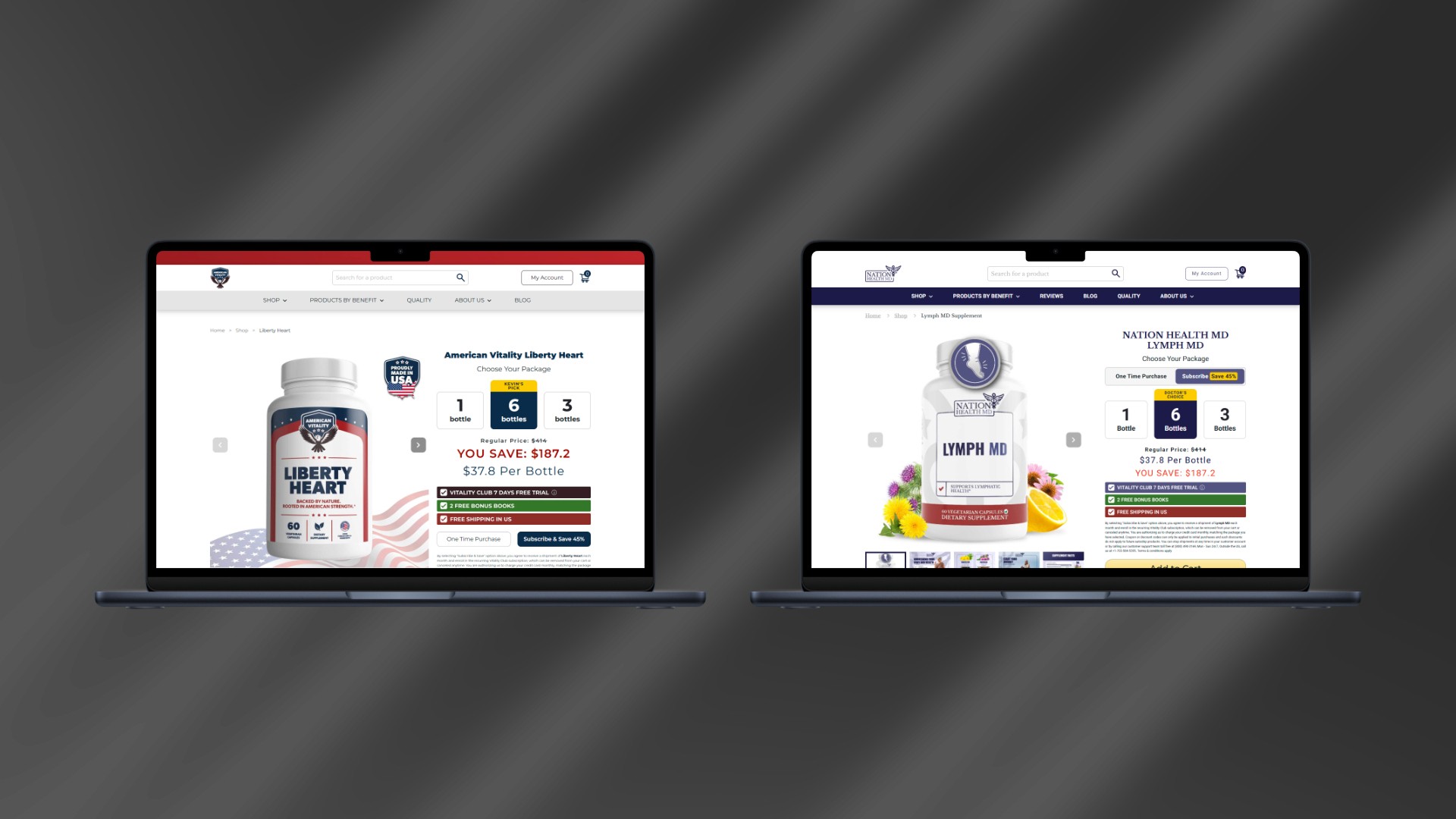
Across seven or more brands and dozens of product lines, one of the core design challenges at Impact Brands was consistency at scale. Each brand needed its own visual identity, distinct enough to feel like a standalone product, but built on a shared structural foundation that allowed the team to work efficiently.
My role in building and maintaining that foundation evolved over several years, from contributing individual components to overseeing the system across the team.
The Challenge
Designing each new product funnel from scratch was unsustainable as the product catalog grew. Every new product launch required the same structural decisions to be made again (layout, component hierarchy, spacing, responsive behavior), often by different designers working in parallel.
The solution was a scalable template approach: each brand got its own design system, but all systems shared the same underlying logic. When a new brand launched, we duplicated an existing system and adapted it (colors, typography, imagery) to the new brand's identity. Structural decisions were already made. Designers only needed to populate content and adjust brand-specific styling.
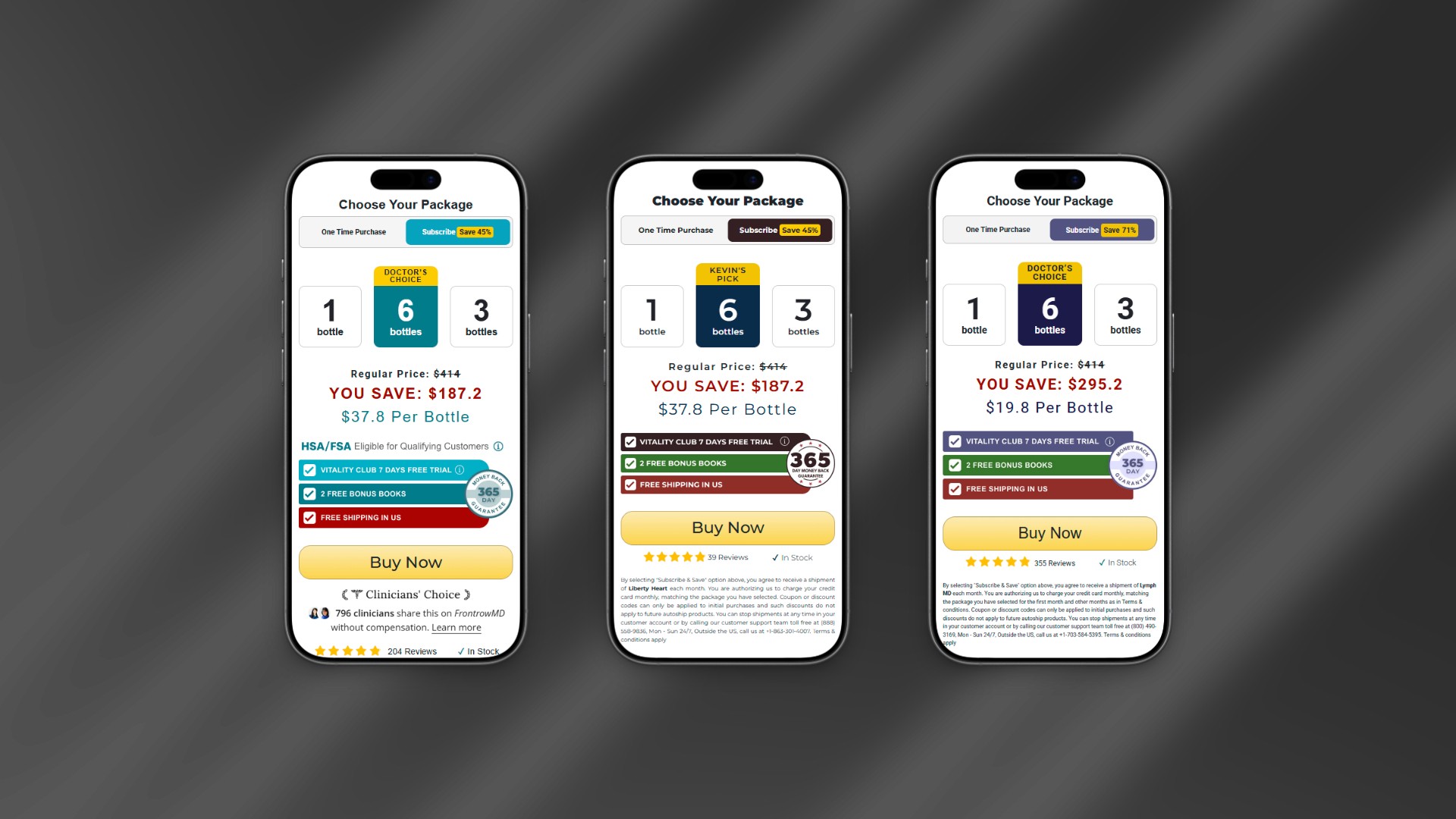
The same component structure, three different brands. Each system was duplicated and adapted, not rebuilt from scratch.
What the System Included
Components: buttons, form elements, pricing blocks, guarantee badges, review sections, sticky CTAs, banners, and more. Each component was designed to work across breakpoints and adapt to brand-specific styling without structural changes.
Color and typography styles: each brand had its own defined palette and type scale, applied consistently across all pages and templates.
Page templates: order pages, product pages, VSL pages, quiz pages. New products could be launched by populating a template rather than designing a page from scratch.
Outcome
The system reduced new product launch time significantly and allowed the team to scale without proportionally scaling headcount. A designer joining the team could produce on-brand, production-ready work faster because the structural decisions were already embedded in the system.
More broadly, it shifted how the team thought about design work: less about individual pages, more about reusable decisions.